Supplier 360 Profile: Building a Single View Across Procurement, Legal, Risk, and Privacy
A supplier 360 profile unifies procurement, legal, risk, and privacy data in one record. Learn what belongs in it and how to build it.
By Jason Ma. Published . Updated
Most organizations manage suppliers in fragments. Procurement tracks contracts and spend in one system. Legal reviews terms in another. Risk runs assessments in a third. Privacy logs data processing in a spreadsheet. When a question arises about a supplier, no one has the full picture. Teams waste time reconciling versions, chasing updates, and asking the same questions twice.
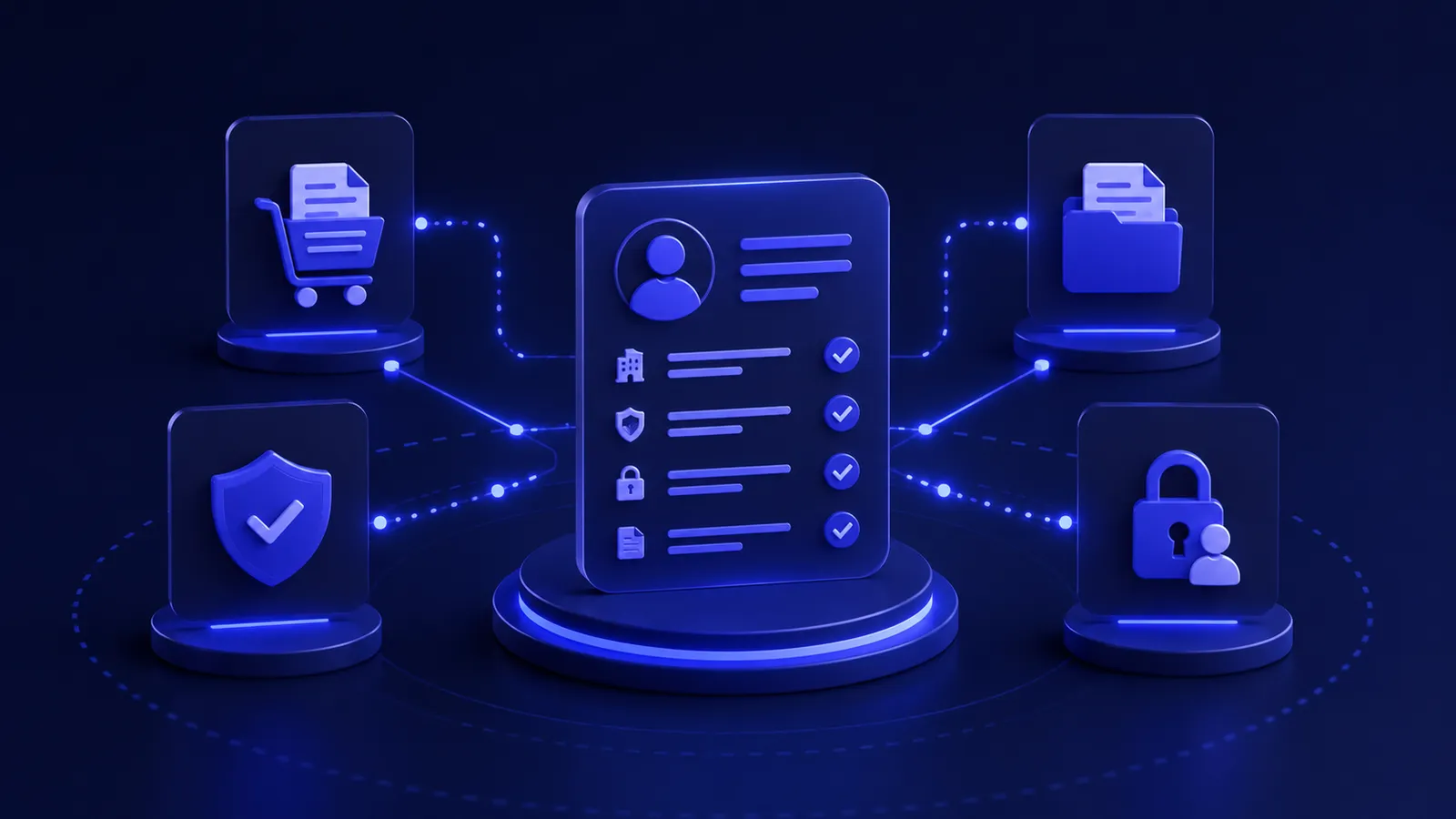
A supplier 360 profile solves this. It is a single, shared record that consolidates every dimension of the supplier relationship: commercial terms, compliance status, risk posture, privacy obligations, and operational metadata. Every function works from the same source of truth. The profile becomes the system of record for the supplier, not a dashboard that pulls stale snapshots from disconnected tools.
What a Supplier 360 Profile Contains
A complete supplier 360 profile spans four domains: procurement, legal, risk, and privacy. Each domain contributes structured data that other functions need to see and act on.
Procurement Data
Procurement owns the commercial relationship. The profile captures supplier master data: legal entity name, tax identifiers, addresses, banking details, and hierarchy. It tracks contracts, purchase orders, spend history, and performance metrics. It records onboarding status, approval chains, and segmentation tags that determine how the supplier is managed.
Legal Data
Legal governs the terms under which the organization does business with the supplier. The profile stores executed contracts, amendments, and renewal dates. It logs review history, redline versions, and approval timestamps. It flags non-standard clauses, liability caps, indemnity terms, and termination rights. Legal needs to see procurement's commercial context. Procurement needs to see legal's approval status and term constraints.
Risk Data
Risk assesses whether the supplier poses operational, financial, or security threats. The profile holds risk tier assignments, assessment scores, control requirements, and remediation plans. It tracks certifications like SOC 2, ISO 27001, and GDPR attestations. It logs audit findings, incident history, and monitoring cadence. Risk needs to see what data the supplier processes and what systems it accesses. Privacy and procurement need to see the risk tier to apply the right controls.
Privacy Data
Privacy determines whether the supplier can lawfully process personal data on behalf of the organization. The profile records data processing agreements, privacy impact assessments, data categories, processing purposes, and retention periods. It tracks consent mechanisms, cross-border transfer safeguards, and subprocessor lists. Privacy needs to see the contract terms and risk posture. Procurement and legal need to see privacy approval status before finalizing the relationship.
Why a Supplier 360 Profile Matters
Without a unified profile, each function operates in a silo. Procurement onboards a supplier without knowing legal has flagged unacceptable terms. Legal approves a contract without knowing risk has downgraded the supplier's tier. Privacy clears data processing without knowing the supplier failed a security audit. The organization takes on risk it did not intend to accept.
A supplier 360 profile makes every function's work visible to the others. When procurement initiates onboarding, legal sees the request and can route the contract for review. When risk downgrades a supplier, privacy sees the change and can reassess data processing. When legal renews a contract, procurement sees the new terms and can adjust spend limits. The profile enforces cross-functional governance by making state changes visible and auditable.
The profile also eliminates redundant work. Teams stop asking suppliers for the same documents multiple times. They stop reconciling conflicting records. They stop searching email threads for the latest version of a certification. The profile becomes the single place to check supplier status, and the single place to record new information.
How to Build a Supplier 360 Profile
Building a supplier 360 profile requires three components: a shared data model, a lifecycle engine, and cross-functional workflows.
Define the Shared Data Model
The data model defines what information the profile holds and how it is structured. Start with the supplier master: legal name, identifiers, addresses, contacts, and hierarchy. Add lifecycle fields: onboarding status, approval timestamps, renewal dates, and termination triggers. Layer in domain-specific fields: contract terms, risk scores, certifications, privacy assessments, and compliance flags.
The model must accommodate all four functions without forcing them into a lowest-common-denominator schema. Procurement needs spend and performance data. Legal needs clause-level metadata. Risk needs control mappings. Privacy needs data flow diagrams. The profile should store each domain's data in its native structure, then expose it to other functions through a shared interface.
Implement the Lifecycle Engine
The lifecycle engine governs how the profile changes over time. It defines the stages a supplier moves through: intake, review, approval, onboarding, active, renewal, offboarding. It enforces the sequence: a supplier cannot move to active until all functions have approved. It triggers workflows: when procurement submits a supplier, legal receives a contract review task. When risk completes an assessment, privacy receives a data processing review task.
The engine also enforces policy. It blocks onboarding if the supplier lacks required certifications. It flags renewals 90 days before expiration. It escalates stalled reviews. It logs every state change for audit. The lifecycle engine turns the profile from a static record into a governed process.
Connect Cross-Functional Workflows
Each function needs its own workspace within the profile. Procurement needs intake forms, approval routing, and spend tracking. Legal needs contract review queues, redline tools, and clause libraries. Risk needs assessment templates, scoring rubrics, and remediation tracking. Privacy needs impact assessment forms, data mapping tools, and consent logs.
These workflows must share the same underlying record. When procurement updates the supplier's legal name, legal sees the change immediately. When risk uploads a new SOC 2 report, privacy sees it in the certification vault. When legal approves a contract, procurement sees the approval and can proceed with onboarding. The workflows are function-specific, but the data is shared.
Common Pitfalls and How to Avoid Them
Organizations fail to build effective supplier 360 profiles for predictable reasons. The first is treating the profile as a reporting layer on top of disconnected systems. Dashboards that pull data from procurement, legal, and risk tools create a read-only view, not a system of record. Teams still update their own systems, and the profile falls out of sync. The profile must be the source of truth, not a mirror.
The second pitfall is building the profile for one function and bolting others on later. A procurement-first profile lacks the data model and workflows legal, risk, and privacy need. A risk-first profile lacks the commercial context procurement needs. The profile must be designed from the start to serve all four functions equally.
The third pitfall is failing to enforce the lifecycle. If teams can bypass the profile and onboard suppliers through email or spreadsheets, the profile becomes optional. Governance breaks down. The profile must be the only path to onboard, renew, or offboard a supplier. Policy must route every supplier action through the profile's lifecycle engine.
How Supervised Agents Use the Supplier 360 Profile
A supplier 360 profile becomes more powerful when supervised agents act on it. Agents can read the profile to understand the supplier's current state, then execute the next step in the lifecycle. An agent can draft a contract review memo by pulling terms from the profile and comparing them to the organization's playbook. It can populate a risk assessment by reading the supplier's certifications and prior audit findings. It can generate a privacy impact assessment by mapping the supplier's data processing activities to the organization's data inventory.
The agent does the legwork, but a human owns every consequential decision. The agent drafts the memo, but legal approves the contract. The agent scores the risk, but risk approves the tier. The agent maps the data flows, but privacy approves the processing. The profile records both the agent's work and the human's decision, creating an auditable trail.
Agents also detect drift. If a supplier's certification expires, the agent flags it. If a contract term changes without an approved amendment, the agent surfaces it. If a supplier's risk tier no longer matches its current posture, the agent recommends a reassessment. The profile becomes a living record that agents continuously validate against policy.
Integrating the Supplier 360 Profile with Existing Systems
Most organizations already have systems for procurement, legal, risk, and privacy. The supplier 360 profile does not replace them. It becomes the system of record for the supplier entity and the lifecycle that governs it. Other systems integrate with the profile to read supplier data and write updates.
A procurement system can pull supplier master data from the profile to populate purchase orders. A contract lifecycle management system can write executed contracts back to the profile. A GRC platform can push risk scores and assessment results into the profile. A privacy management tool can read data processing agreements from the profile to populate a data map.
The profile exposes APIs that other systems call. It also subscribes to events from those systems. When a contract is executed in the CLM, the profile updates the supplier's contract status. When a risk assessment is completed in the GRC platform, the profile updates the supplier's risk tier. The profile orchestrates the supplier lifecycle, and other systems contribute data to it.
Measuring Success
A supplier 360 profile succeeds when it becomes the default place teams go to answer questions about a supplier. Measure adoption by tracking how often teams access the profile versus asking colleagues or searching email. Measure completeness by tracking what percentage of suppliers have all required fields populated. Measure governance by tracking how many suppliers move through the lifecycle without manual escalation.
Also measure cross-functional visibility. Track how often legal views procurement data in the profile. Track how often risk views privacy assessments. Track how often procurement views legal approval status. The profile works when every function relies on the data other functions contribute.
Building the Profile in Practice
Start with the supplier master and the intake process. Define the fields every function needs to see: legal name, identifiers, contacts, and hierarchy. Build the intake form that captures this data when a supplier is first proposed. Route the intake to procurement, legal, risk, and privacy for parallel review. Record each function's approval in the profile.
Next, add the lifecycle stages. Define what it means for a supplier to be in intake, review, approved, active, or offboarded. Enforce the sequence: a supplier cannot move to active until all functions approve. Trigger workflows at each stage: when a supplier enters review, assign tasks to the relevant teams.
Then layer in domain-specific data. Add contract terms, risk scores, certifications, and privacy assessments. Build the workspaces each function needs to manage their part of the supplier relationship. Connect those workspaces to the shared profile so updates flow across functions.
Finally, integrate with existing systems. Connect the profile to your procurement, legal, risk, and privacy tools so data flows in both directions. The profile becomes the hub, and other systems become spokes.
A supplier 360 profile is not a dashboard. It is the system of record for the supplier, the lifecycle that governs it, and the cross-functional workflows that manage it. When built correctly, it eliminates silos, enforces governance, and gives every function the context it needs to make decisions. It turns supplier management from a fragmented process into a unified discipline.
Related reading
- Who Owns Supplier Master Data and How to Keep It Clean
- Supplier 360: One Record Across Procurement, Legal, Risk, and Privacy
- Supplier Lifecycle Management Stages and What Happens at Each One
- How Supervised AI Agents Manage the Supplier Document and Certification Vault
- Building a Procurement Governance Framework That Survives Audit
Source: CIPS, the Chartered Institute of Procurement and Supply